


ON VIEW: 4th March – 12th June 2022
In Dineo Seshee Bopape’s (b. 1981) haunting installations and videos, the history of her native South Africa prompts reflections on memory and hegemony over land and bodies in relation to the lived experiences of African people (and also beauty). Her work is informed by her quest for a visual, acoustic, and material language that evokes an autochthonous aesthetic. It articulates (particularly) the African diaspora’s peoples’ resilience and healing as well as their sustained energies of resistance to and emancipation from and traversing ‘through’ the violence of the white supremacist capitalist patriarchal matrix. Bopape makes art out of carefully selected everyday materials such as soil, clay, fabric, plants, containers, paint and digital media. Their material and symbolic properties often appear in conversation with ideas about politics, aesthetics, the metaphysics of self/thing/spirit and relationality, sovereignty, presence, home, land and waters, language, song, and memory …
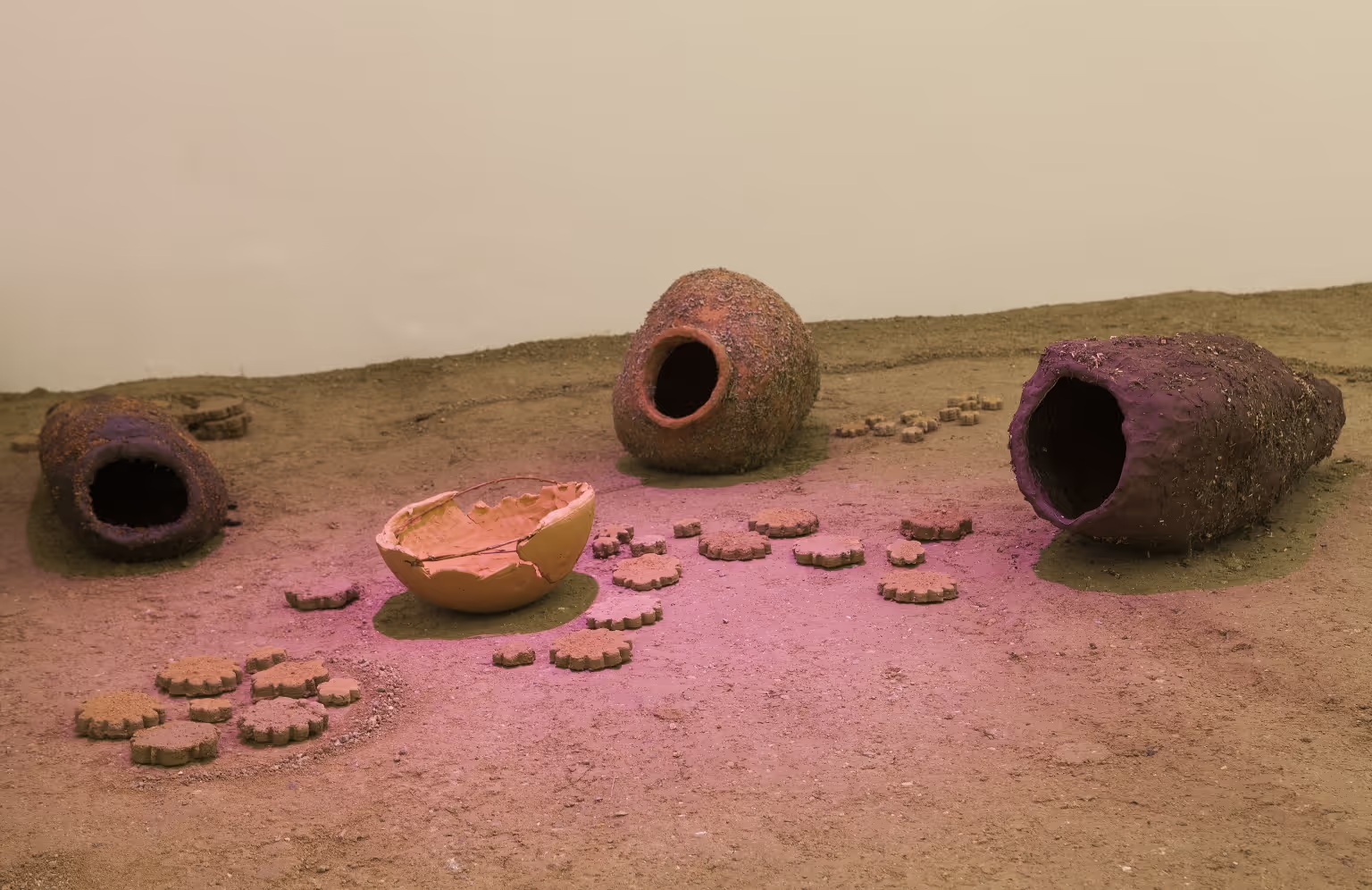
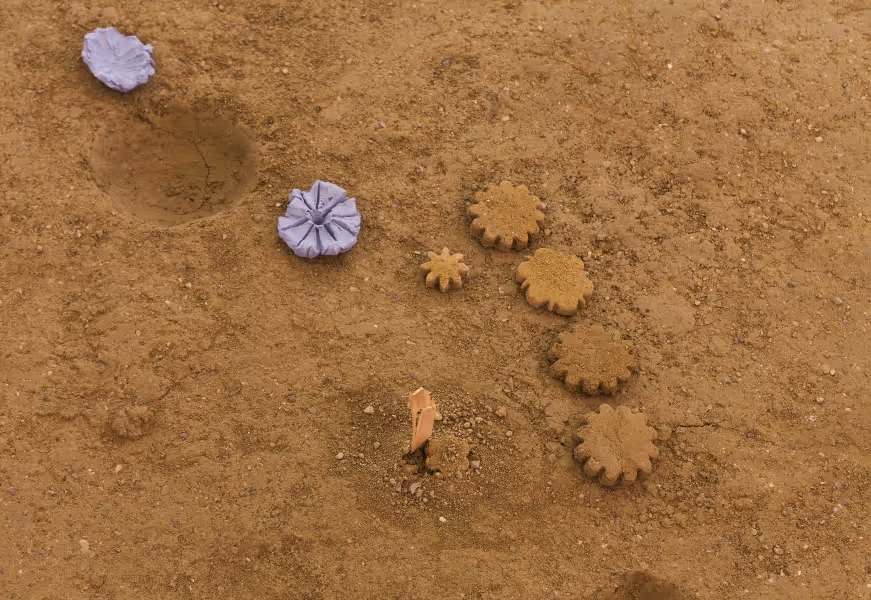
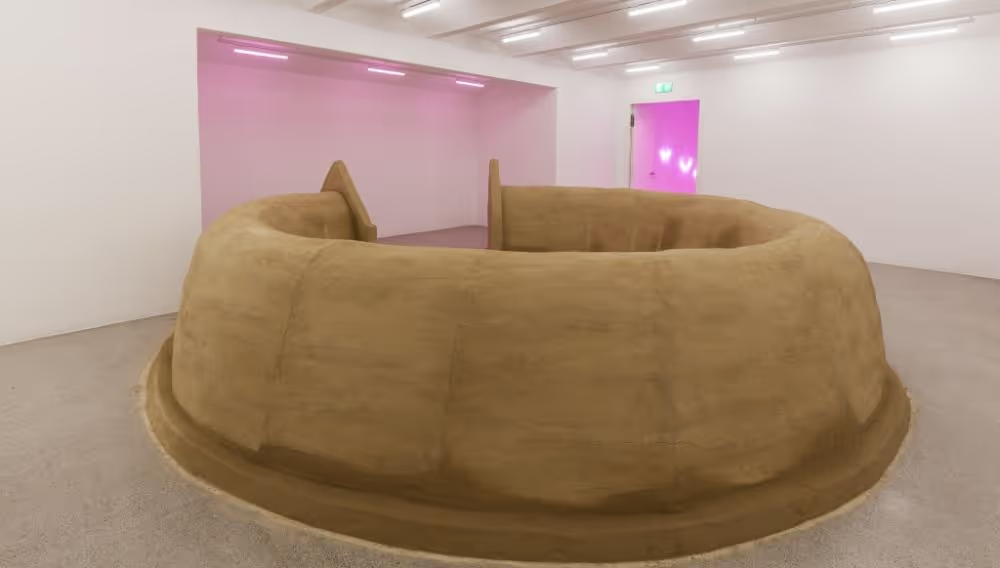
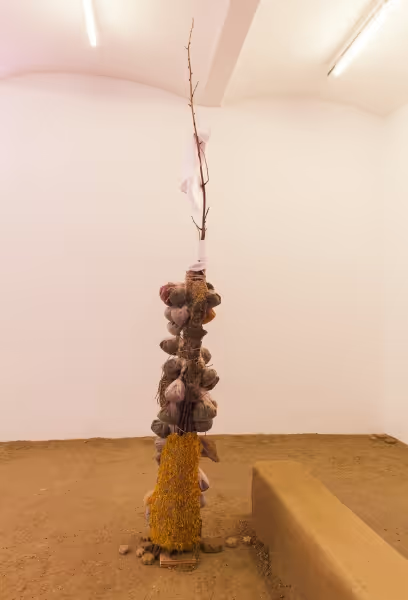
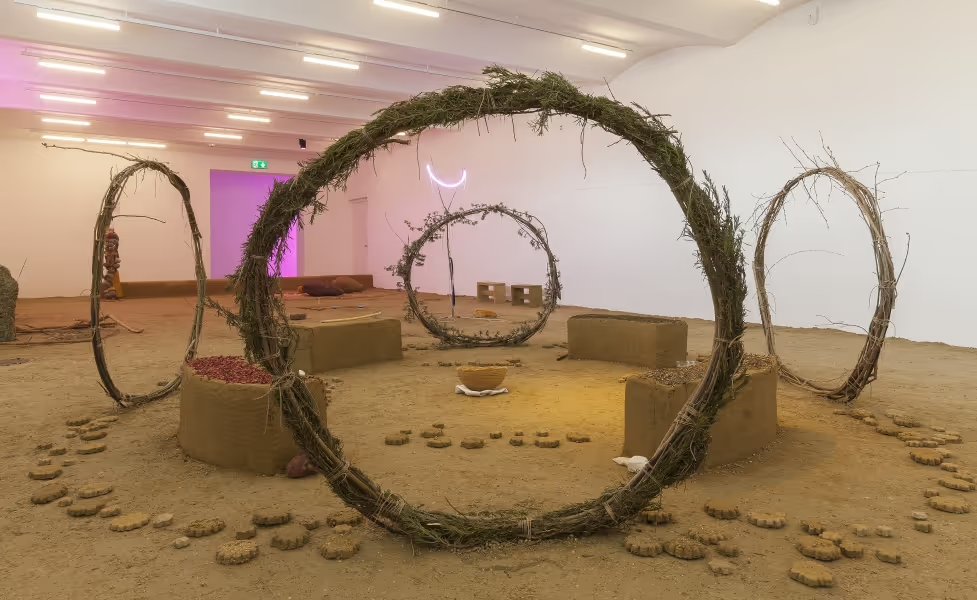
At the Secession, Dineo Seshee Bopape has developed a new site-responsive installation that transports visitors with its intense physicality. The exhibition space is kissed with pink light and filled with the buzzing of honeybees. Cupolas and knee-high walls made of pressed clay speak the language of that ephemeral thing brought forth and housed through form via the architecture of open-air enclosures/courtyards in some traditional African villages (reception area, courtyard, court, outdoor prayer enclosures). These create a flowing spatial spiral movement and structure between inside and outside, to the work’s center, and offer an entrance … a portal. Circular depressions in the floor at one of the centers of the ensembles mirror a cosmic constellation and form linkages to earlier generations of works by Bopape. Like the clay bowls and vessels they act as containers, receptacles, orifices or invocation instruments and monuments to invoke amongst others, ideas of the feminine and … satellites (of home: home ground/ home soil).
Bopape’s constellation of elements is fraught with social, political and symbolic signification. Among the different knowledges she draws on is the ancient Southern African creation story that, when rock and fire collided, water was born. The story, like much indigenous knowledge and modes of being, became besieged and suppressed during Western Imperialist colonization/colonial eras and was read to be contesting the rational/European Enlightenment project, the Modern, the ‘Christian’ … Western European political identity … Like any creation story, it is a source for identity and orientation towards the world. How does one translate this story of the beginning of the world to the now? Bopape’s approach as an artist is an intuitive journey through it, focusing less on representation but ‘relations’ at play. To her it presents possibilities to read and ‘revision’—dream anew events—in the layers between the sky and the earth …
In her installation, Bopape creates an interchange of experience and meanings as springboard of another rationality as well as medicine for the feminine … The multiple connections of matter, life and spirit are sung through the exhibition title Lerato le le golo (… la go hloka bo kantle) [a big love (… that has no outside)]. The poetic line in SePedi—Bopape’s mother tongue of Southern Africa—refers to the relation between things—an unconditional love … A feeling overflowing in the smell of rain on heat-soaked African soil … Pula (Rain), precious in the land of her birth, is synonymous with life, fertility and wealth. In SePedi, it is often eulogized in songs as a comforting presence/witness, event (pula ya medupi). There is a sensuality of it oft-referenced in coming-of-age ceremonies … and those celebrating land and fecundity … also in dialogue with various indigenous stories, an expression of the fertilization of the ground by the sky via rain, and often involving the serpent of creation … something about regeneration is at play here.

