

Supported by Outset since 2009, the Cubitt Curatorial Fellowship is a unique opportunity for research and curatorial experimentation in the field of visual arts, based on an 18-month residency, the only such scheme in the UK and one of very few in the world. This includes an initial 3-month research and fundraising period, followed by 15 months of programming. It gives emerging curators the opportunity to curate one of the UK’s most established artist-run spaces.
The programme of Fatima Hellberg, the 9th Cubitt Curatorial Fellowship holder, ran between April 2014 and June 2015.
Hellberg’s programme opened with The Shape of a Right Statement, an exhibition where moving image and sound were timed on an eighteen-minute loop. The intricate AV setup, following a pre-programmed score, allowed image and sound to layer in the space. The focus of the show was the largely unknown work of pioneering video artist Cynthia Maughan and brought together newly digitised work from her oeuvre of over 300 videos alongside existing work and new responses by conceptual artist Ben Kinmont and performer and filmmaker Wu Tsang. A point of return for this show, which has been articulated further throughout the programme, was an emphasis on artistic dialogues and the conditions of practice – on the form of space that is carved out for making work, and the slippages between desire and survivalism in establishing and maintaining a room of one’s own. It is a set of concerns, which was unpacked in more direct terms in a collaboration and exchange between composer and humanist software developer Laurie Spiegel and poet and artist Dena Yago, in an exhibition which explored strands of friendship, co-habitation and surivalism, using city birds as a metaphor for their conversation.
Throughout the shows, events and points of encounter, there has been an ongoing desire to play with, and subvert the assumed hierarchy and triad of ‘exhibition-events-publication’, and to allow slippages of these different forms of engagement and their relative importance.
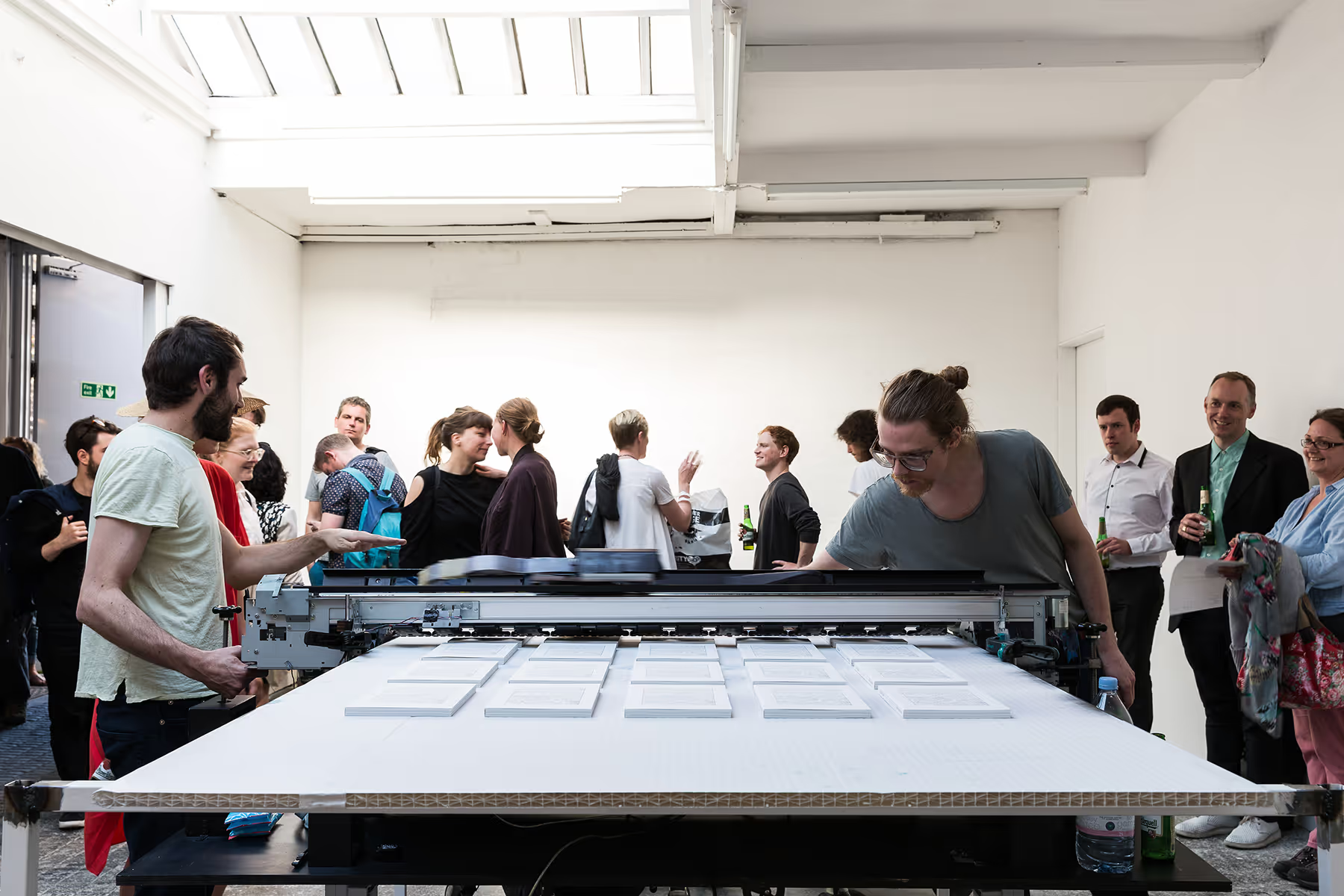
A project which brought in a level of pleasure and subversion into this territory was 'e industrial', an exhibition, event and publication by Jean-Michel Wicker. The show featured a 70-metre scroll, a publication and smoke, which marked the culmination of a seven-year work period. The ‘e industrial project’ was concluded in a part-performance, part deinstallation of the work in which the scroll was cut and sold by the metre.
Thinking more directly of the institution, and the conditions for making work was 'INSIDER', an exhibition by London-based artist Sidsel Meineche Hansen. The show saw a life-size replica of the artist’s room and a CGI generated animation with a soundtrack and narrative by poet and empowerment speaker Lydia Lunch. 'INSIDER' also involved the event 'Why Does Fred Sandback’s Work Make Me Cry?', a seminar co-presented with 'If I Can’t Dance' (Amsterdam), and which involved reflections on practice, institutional critique and desire. As a parallel engagement, the show was also focused on conversations and meetings with groups from local charities and community centres, building up a set of dialogues around the exhibition and its implications outside the space of the gallery.
Fatima Hellberg said: 'Cubitt is a space for practice - for artistic, and curatorial practice. It’s this atmosphere of experimentation and dedication that makes the space so generous, and where it has had a profound, and thrilling influence on my own work and approach.'
Fatima Hellberg contributes to Frieze, Afterall, Texte zur Kunst and other independent journals, and has curated projects in the UK and internationally, including at Tate Modern, the South London Gallery, the Paris Triennial and Malmö Konsthall, Sweden. Fatima Hellberg is currently the Artistic Director of Künstlerhaus Stuttgart.

