

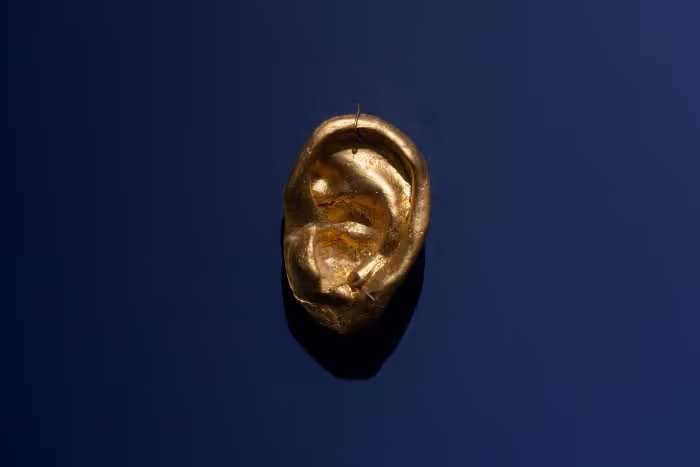

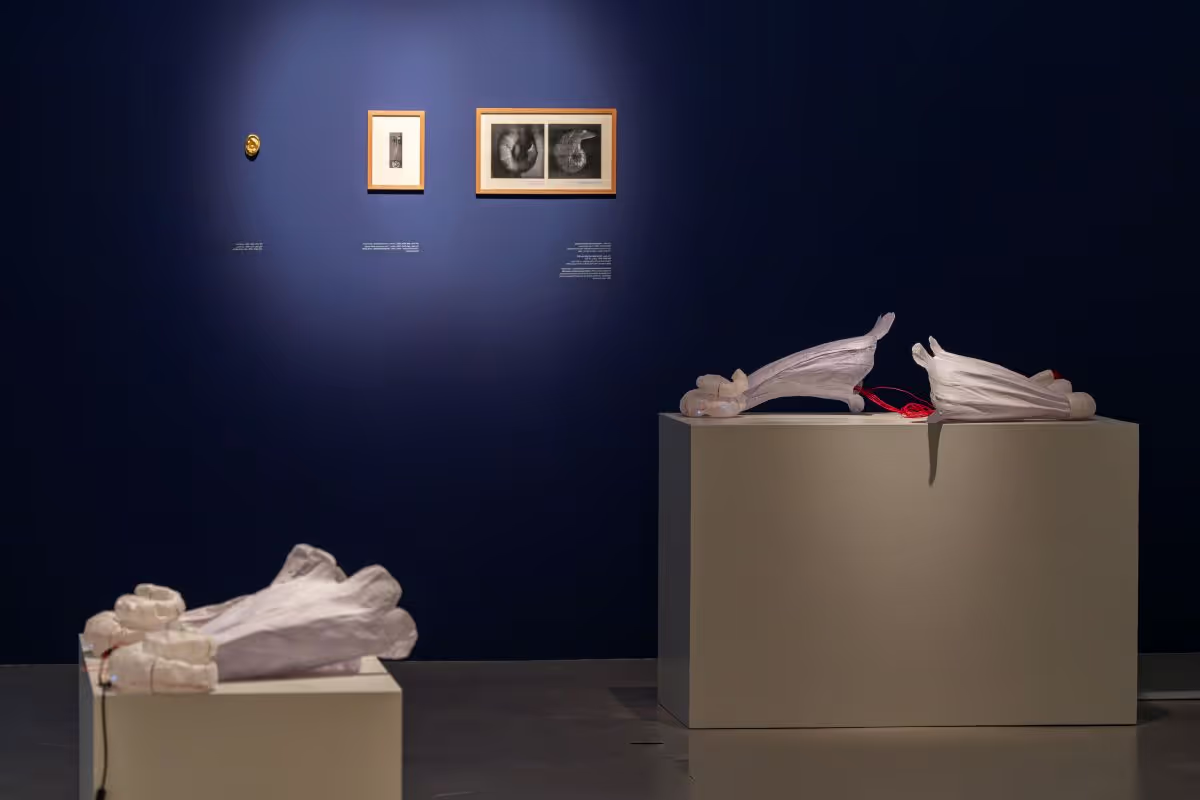
The exhibition "Re: Empathy" highlights our ability to care for one another, and the important and rewarding experience of drawing together. This exhibition, like those preceding it, involves a dialogue with the university’s scholarly community – this time concerning the themes of empathy, social behavior and responses to pain.
Although we all share a need to receive empathy, there are situations in which it is very difficult for us to provide it for others. When we observe another person in pain, our brain reacts just as it does when we ourselves experience the same pain. Yet when we are surrounded by so much suffering, and are under extreme danger, our sense of empathy is often limited to our affinity group. Since we perceive the group as protecting us, we provide ample empathy to its members, while significantly limiting our empathic response to those external to it. The exhibition explores how does indifference to the pain and suffering of those outside our immediate group of identification impact our humanity? Such alienation may lead to polarization within Israeli society, as well as to the dehumanization of those outside of it.
Empathy is the capacity to understand the other’s point of view, to experience their feelings, and to wish for their condition to improve. It is not unique to humans, and is shared by many species of animals. Empathy is a natural, fundamental capacity inherent to each and every one of us. The "empathy muscle" is extremely flexible; as we bring more attention to it and to the importance of our social attachments, we can strengthen our capacity for empathy.
Outset IL supported the works of
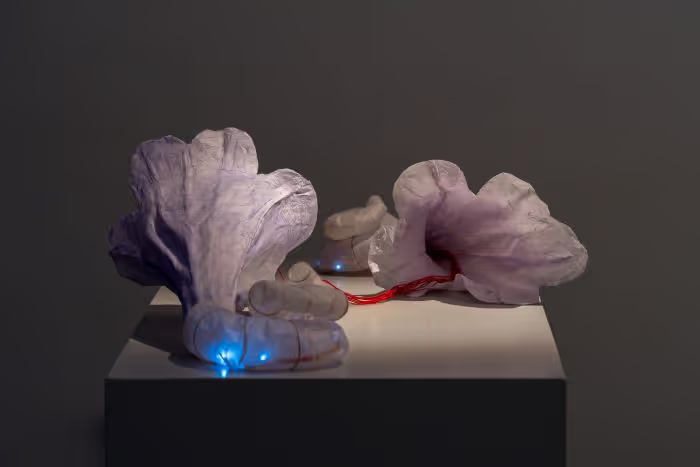
Netaly Aylon (B. 1987), Moving Matters, 2024
Installation
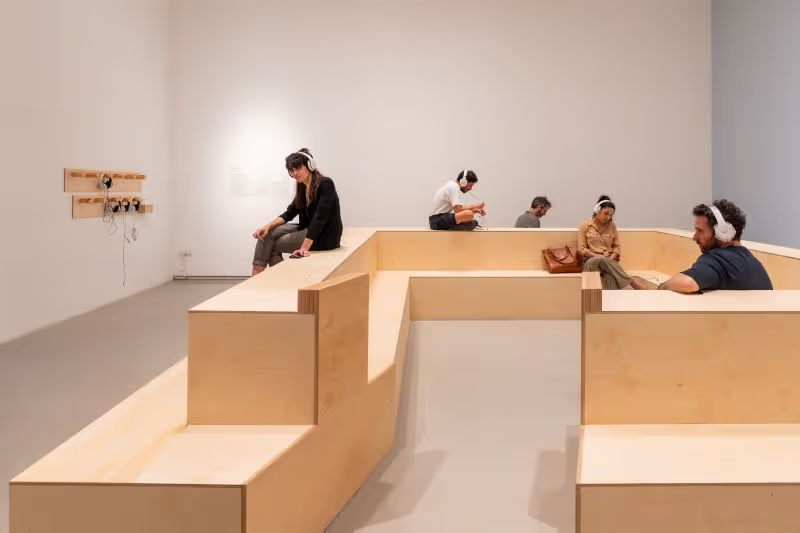
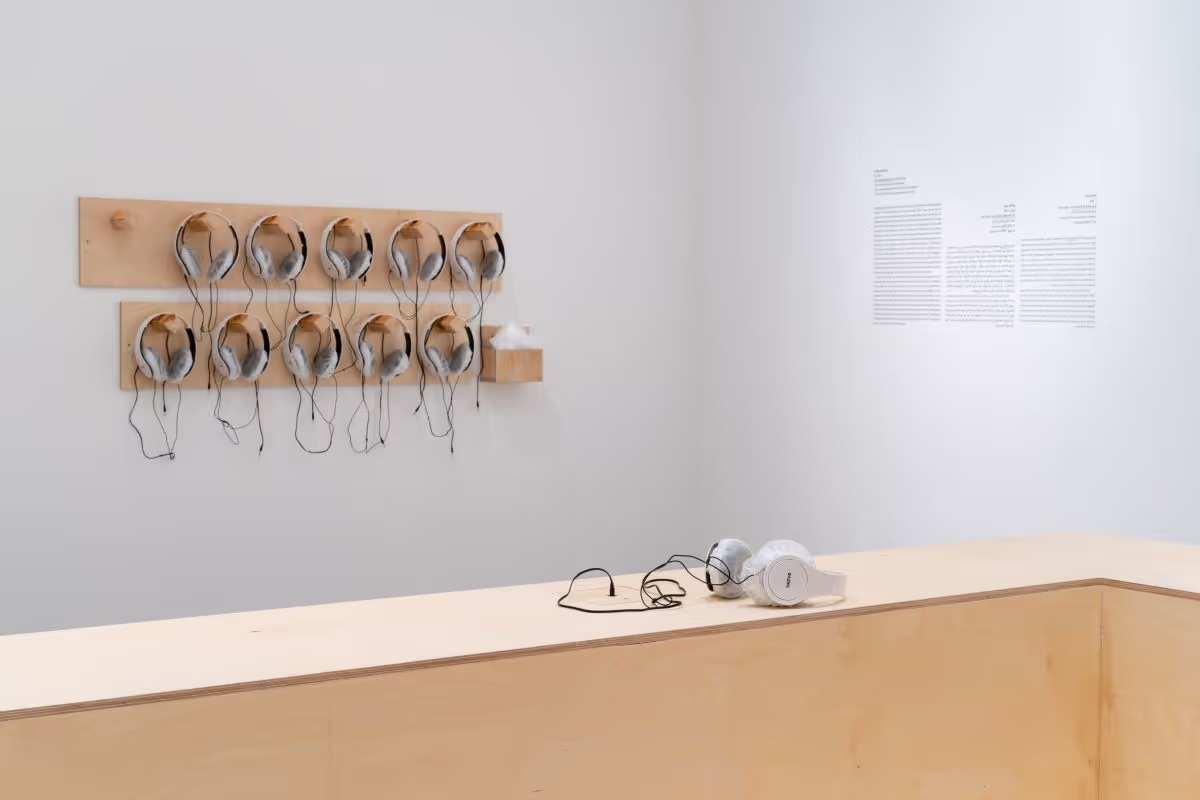
Jonathan Ron (B. 1987), You Were Missed 2.0, 2021/2024, Performative sound installation

