

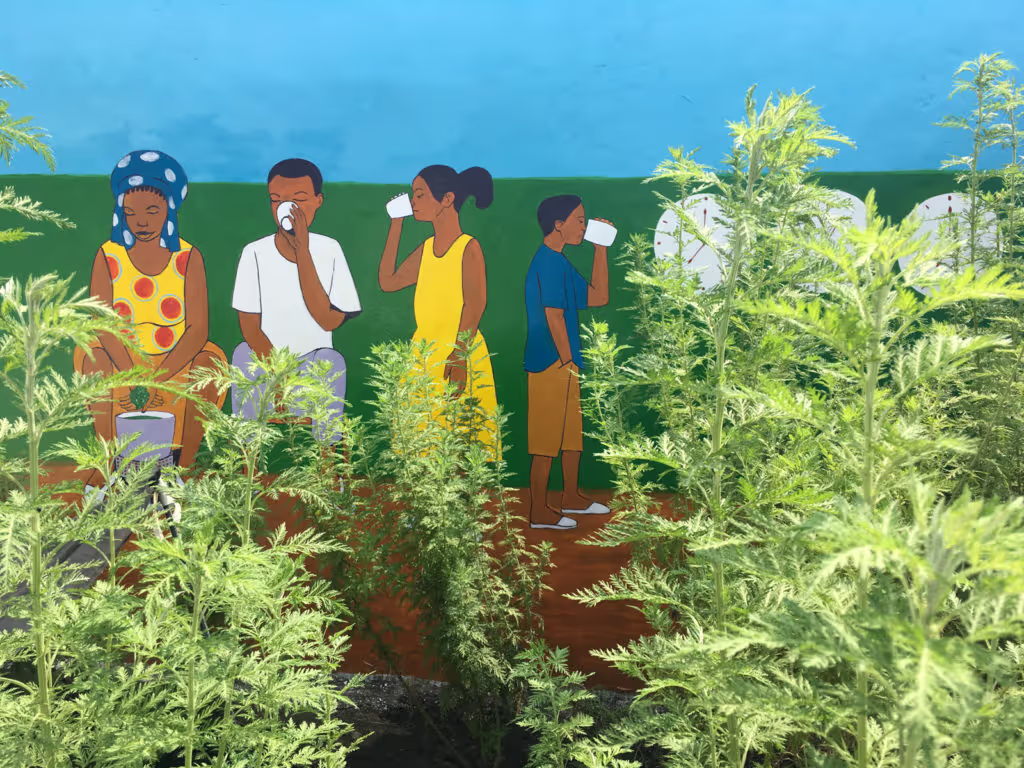
In 2020 State of Concept presented the works of Swiss artist Uriel Orlow in a series of screenings, as well as the artist's recent film, "Learning from Artemisia", as part of State Affairs.
State Affairs, since 2017 is an exhibition chapter dedicated to artists that work with video and the moving image. It presents artistic practices that focus on thematics unfolding and narrated gradually through several artworks, practices distinguished for their interest in shedding light on historical conditions and how they affect contemporaneity. The practices selected for this exhibition chapter are characterized by an essayistic approach to issues that involve, racism, religion, futurism, post-colonial discourse, nationalism etc., at times blending, documentary, performance and the moving image. The programme aims to directly address current affairs, predicaments, problematics and cul-de-sacs of contemporary living, by at times, summoning the past.
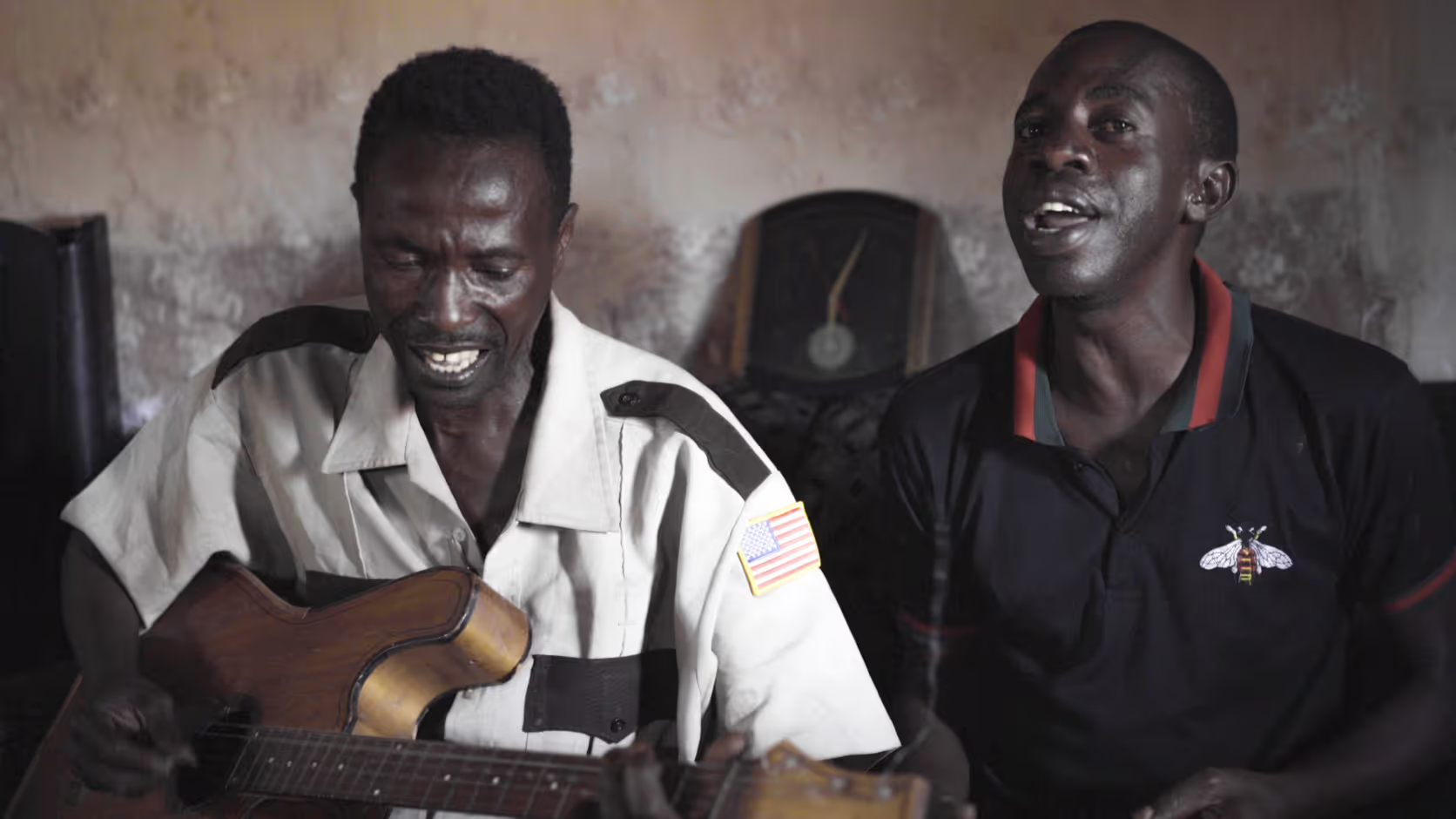
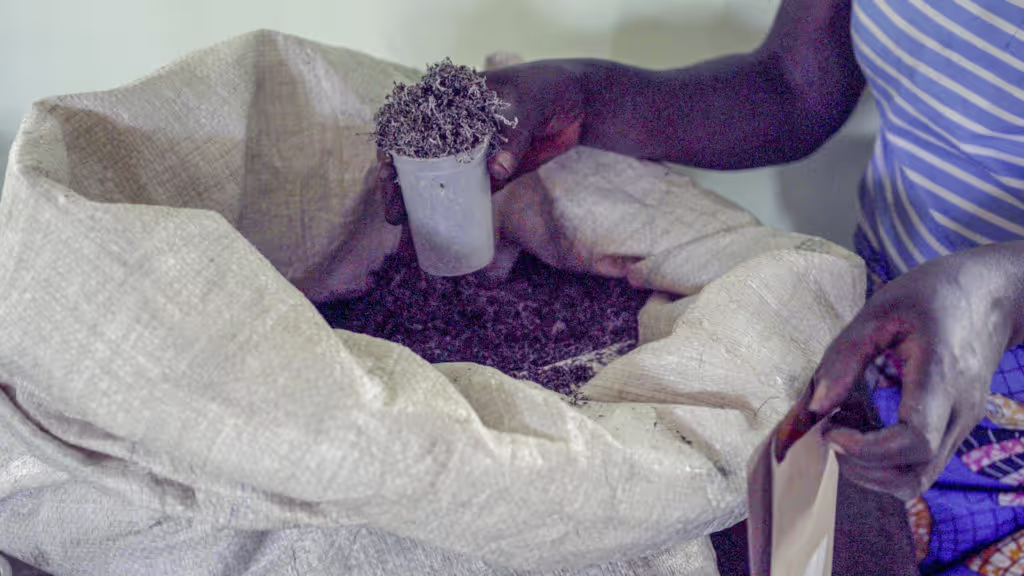
"Learning from Artemisia" is an in depth research of the medicinal plant "artemisia afra", the three-channel video installation, is an atmospheric, at times harsh and deeply informative journey through the histories of medicinal plants and their relationship to geopolitics. Artemisia afra, the African wormwood, an indigenous medicinal plant cultivated in the Democratic Republic of the Congo alongside other African countries. It is used for the treatment of malaria and can simply be taken as an infusion. Despite studies that show its effectiveness and the simplicity of its administration and sustainability of its local production, it is not recommended as a treatment by the World Health Organisation which appears to favour the pharmaceutical industry and its global reach.
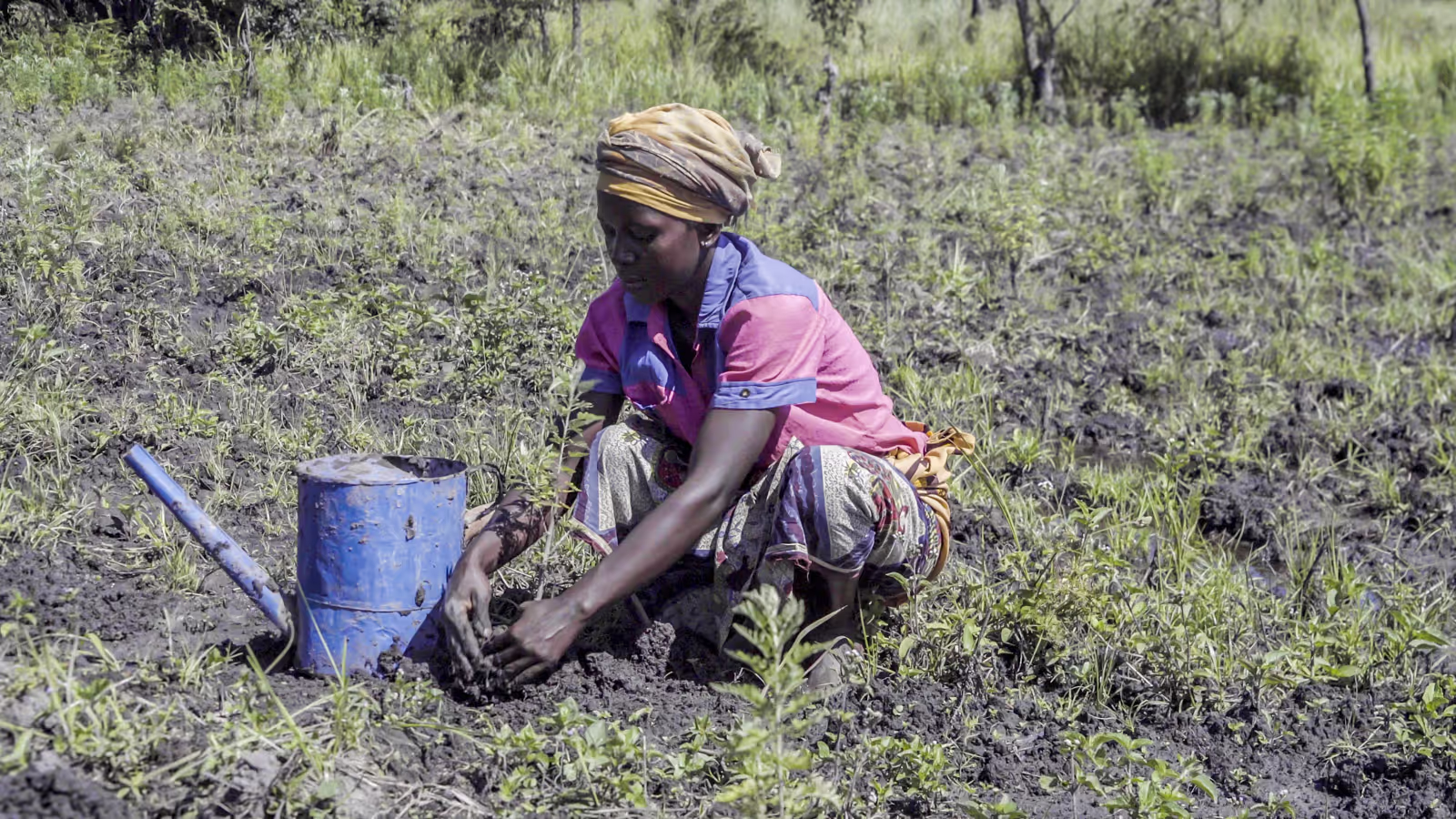
Originally commissioned by the Lubumbashi Biennale, Uriel Orlow worked for several months with a women’s cooperative in Lumata, south of Lubumbashi, DRC. The cooperative is growing Artemisia afra with the proceeds funding a collective health insurance for themselves and their families. Artemisia afra grows in different parts of Africa including the Congo and contains no artemisinin (but a potent cocktail of minerals, including abundant copper) yet is still highly effective as an infusion; not only does it resist drug resistance but it also resists extractive medicine. In the context of the Democratic Republic of Congo whose colonial and postcolonial economy has been dominated by various forms of extraction (mainly of minerals) Artemisia afra can help us to imagine much needed non-extractive relationships to natural resources as well as local and sustainable healthcare solutions and forms of solidarity without big pharma.
ON VIEW: 2nd July–17th July 2020
Uriel Orlow's (b. 1973, Zürich) practice is research-based, process-oriented and multi-disciplinary including film, photography, drawing, and sound. His multi-media installations focus on specific locations and micro-histories and bring different image-regimes and narrative modes into correspondence. His work is concerned with residues of colonialism, spatial manifestations of memory, blind spots of representation, and plants as political actors.Uriel Orlow’s work on view this summer at a solo show at La Loge, Brussels and as part of exhibitions at Para.Site, Hong Kong; ZKM Karlsruhe; Mito Art Tower, Mito-Japan; Kunstmuseum Lichtenstein, Vaduz and Galeria Quadrum, Lisbon. Recent solo exhibitions include Kunsthalle Mainz (2019-2020), Tabakalera, San Sebastian and Villa Romana Florence (2019), Kunsthalle St Gallen, Market Photo Workshop Johannesburg and Les Laboratoires d’Aubervilliers Paris (2018). Uriel Orlow’s work has also been presented at major survey exhibitions including the 54th Venice Biennale, Manifesta 9 & 12, Lubumbashi Biennial VI, 13th Sharjah Biennial, 7th Moscow Biennial, 8th Mercosul Biennial, Aichi Triennale and Bergen Assembly amongst others.Publications include Conversing with Leaves (Archive Books, 2020), Soil Affinities (Shelter Press, 2019) and Theatrum Botanicum (Sternberg Press, 2018).

