

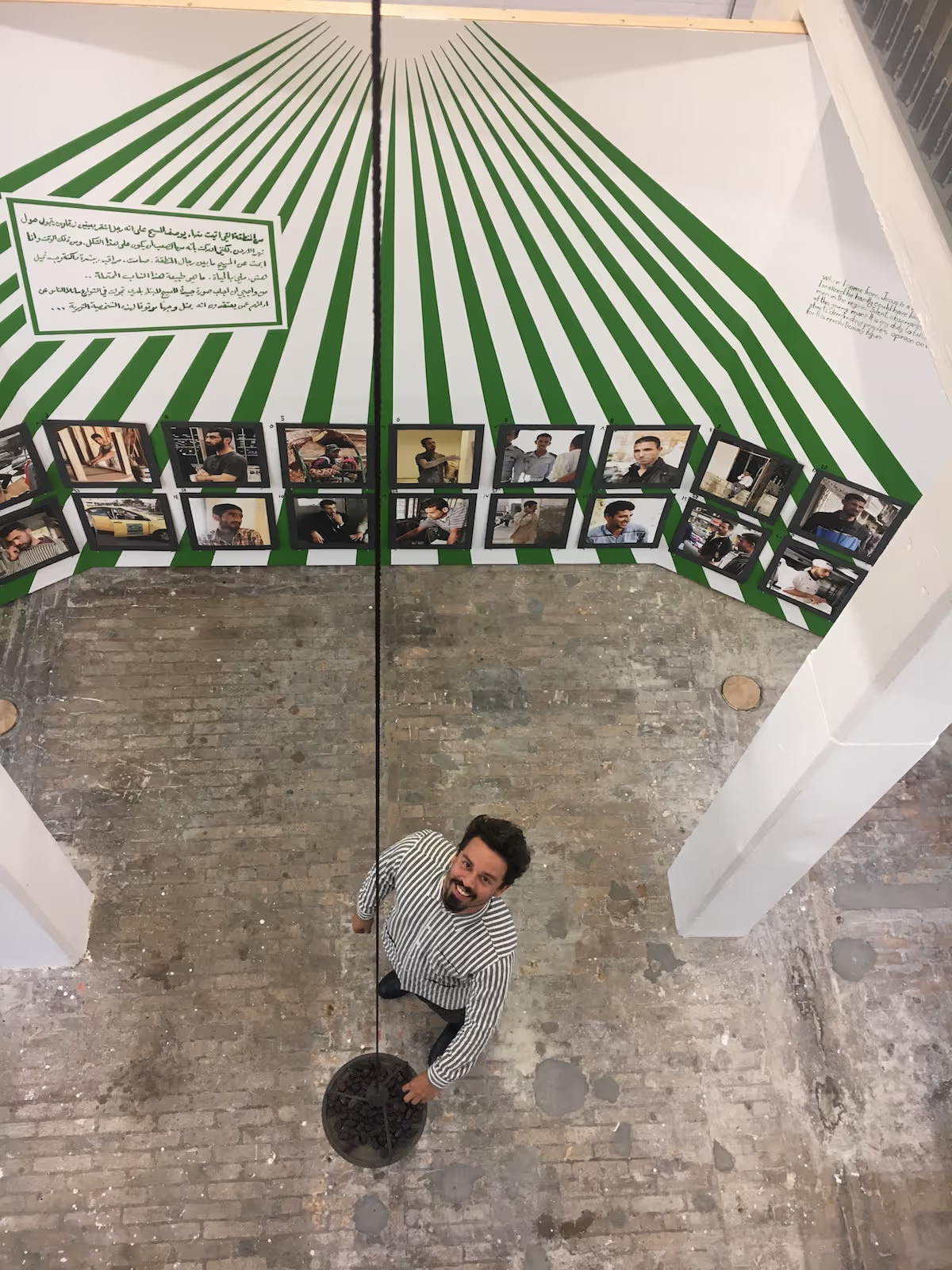
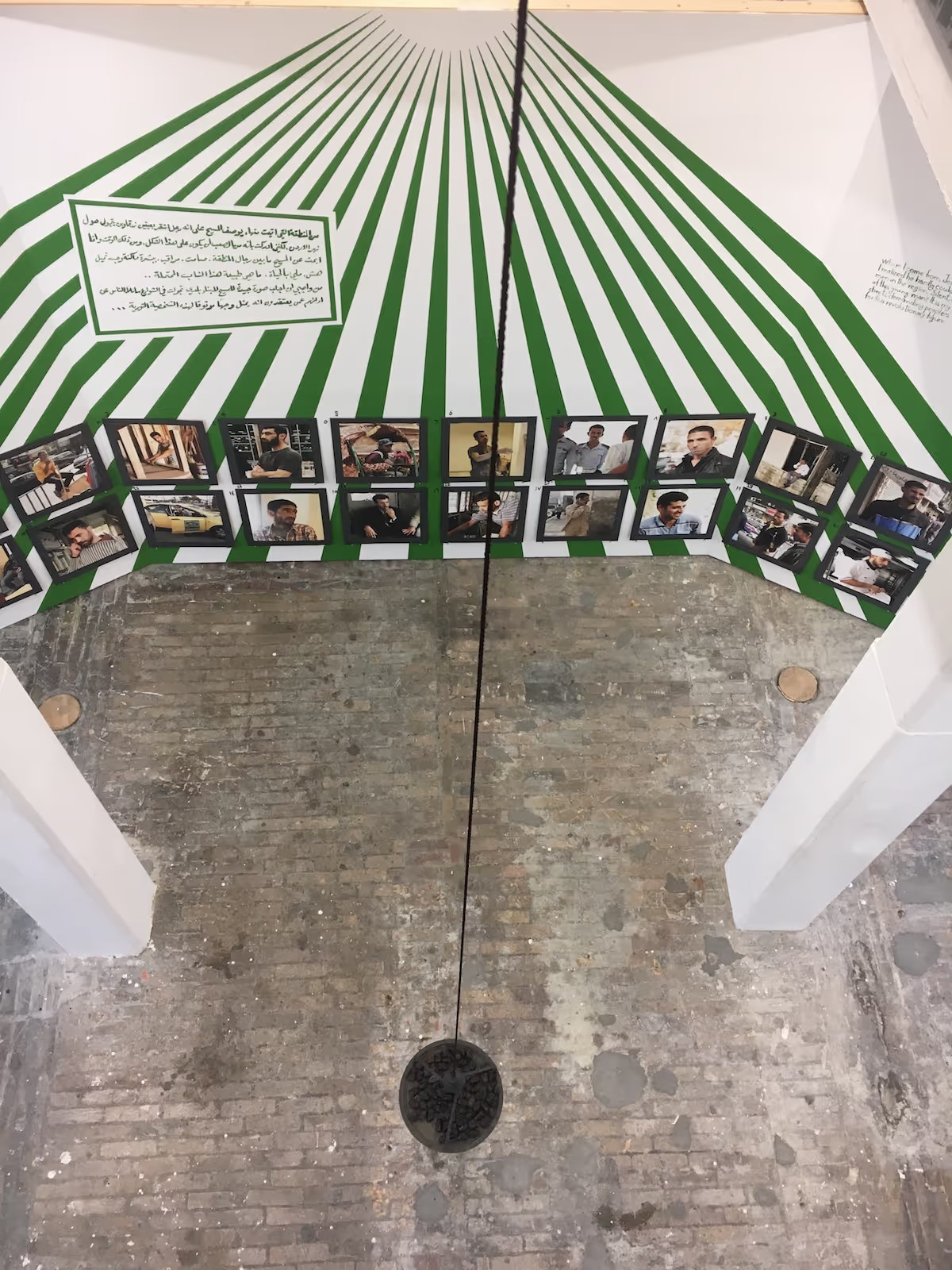
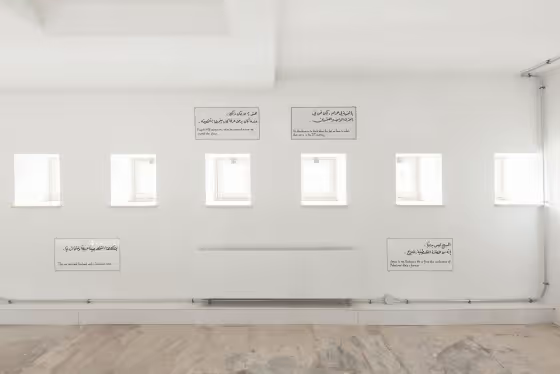
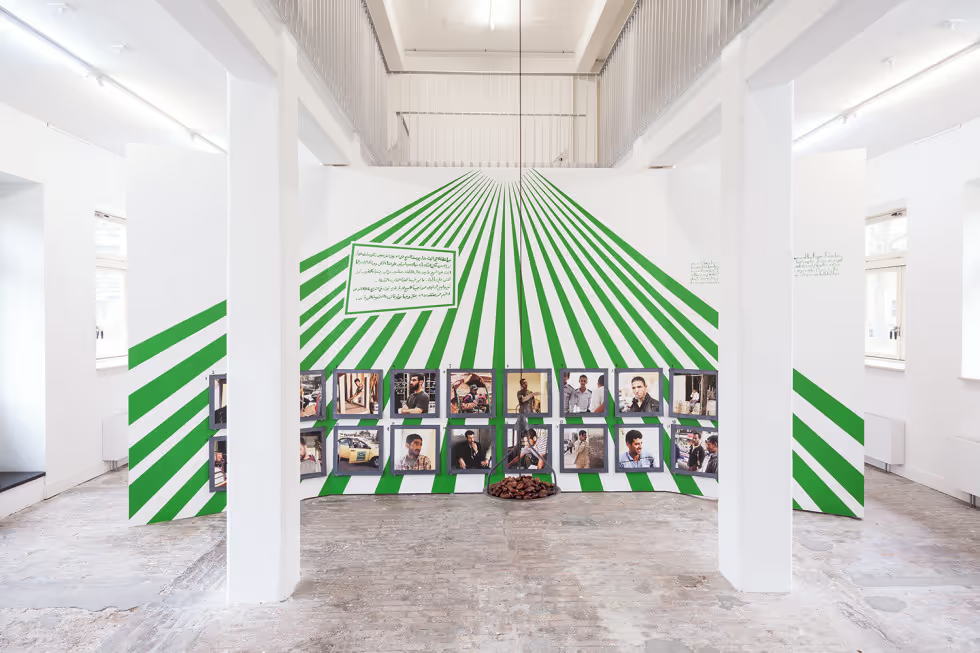
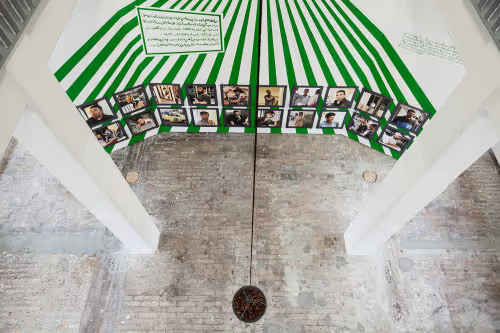

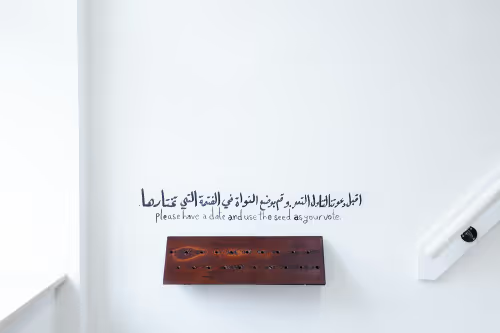
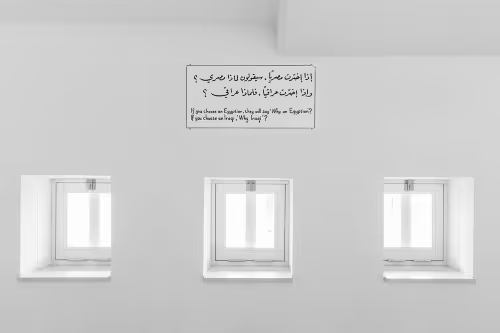
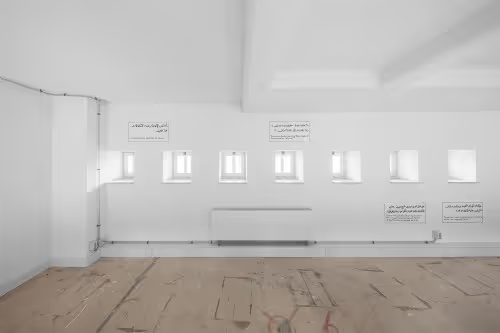
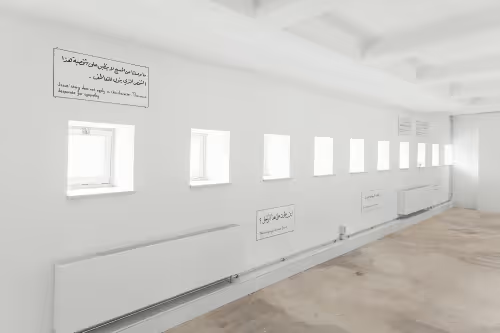
Outset Netherlands was delighted to have supported the TUB International Residency Program 2016 with Brazilian artist Jonathas de Andrade and his resulting exhibition 'Looking for Jesus' in 2017.
The TUB International Residency Program focuses specifically on artists whose roots lie outside the Western artistic canon. Their practices address universal questions by zooming in on individual histories and local cultures. The artists are encouraged to make connections with the local context and histories in which A Tale of a Tub operates with the aim of building bridges between ‘global’ and ‘local’, between international developments in art and the social and cultural conditions of the neighbourhood of Spangen.
During his residency in Spangen, Rotterdam, Jonathas de Andrade dived into the eventful history of the monumental Justus van Effen Complex, home to A Tale of a Tub. This history serves as a blueprint to gain new insights into the social and cultural conditions of Spangen, the most demographically diverse neighborhood of the Netherlands. Over 80% of households in Spangen are of non-Western origin. In his research De Andrade interweaved ideals of modernist social housing – on which the Justus van Effen Complex is based – with the complex social fabric of the neighbourhood today. His research led to the production of new work, presented at his 2017 exhibition 'Looking for Jesus'.
ON VIEW:9th February – 9th April, 2017
In his work Jonathas de Andrade (b. 1982) focuses on personal histories and brings them in relation to the social, political and ideological realities in which these histories occur. From a private and intimate perspective, he sheds new light on social issues, such as the notion of failed modernism, cultural amnesia and issues of representation. His anthropological research poses a new perspective on historical and current events through the fictionalisation of universal truths. The artist often works with documentary material that forms the basis of his exploration into the social and cultural conditions of the place where he works. This historical material becomes interwoven with his own findings and imagination, creating an intricate web of fact and fiction. In doing so, De Andrade is able to make social dynamics and internal power relations visible and palpable in a subtle manner.

