


Artist Ya'ara Zach was an Outset StudioMakers Tel Aviv guest in 2018.
Zach worked during March - June 2018 in the studio, towards two exhibitions titled "Unreasonable Doubt" exhibited at the Petach Tikva Museum of Art, curated by Hadas Maor; and at the Moscow International Biennale for Young Art, Russia, curated by Lucrezia Calabrò Visconti.
About "Unreasonable Doubt", Moscow International Biennale for Young Art, Russia, curated by Lucrezia Calabrò Visconti:
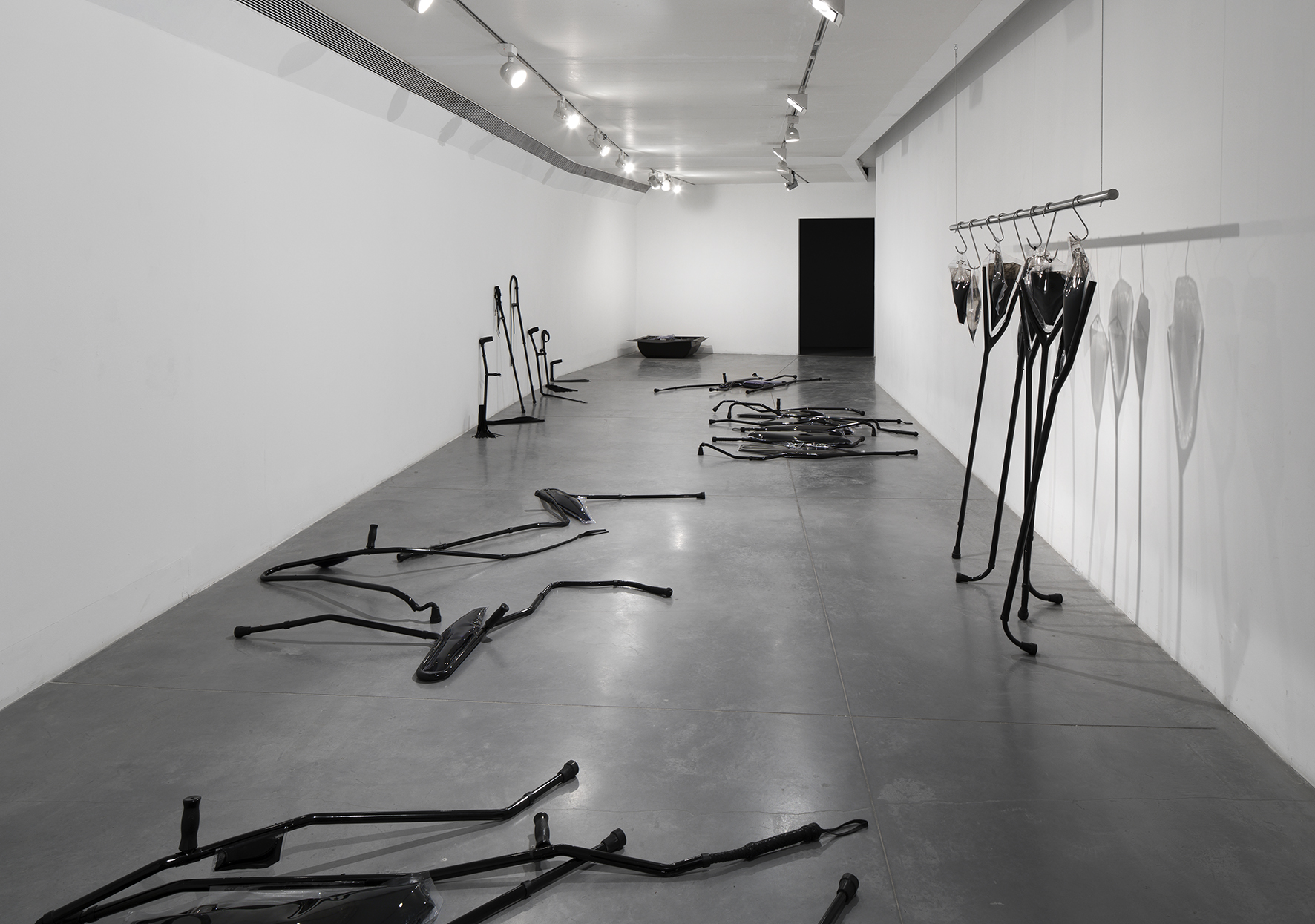
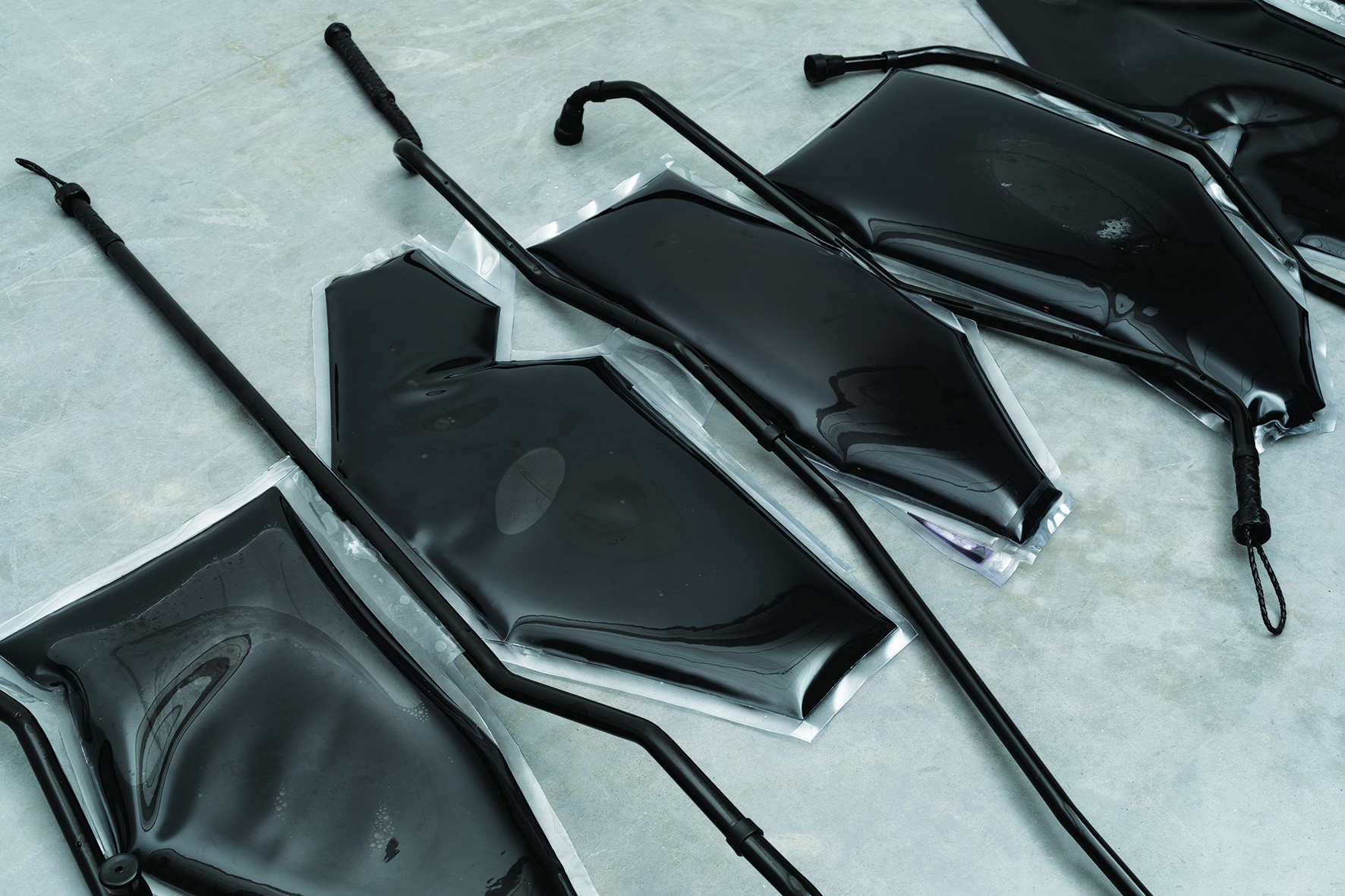
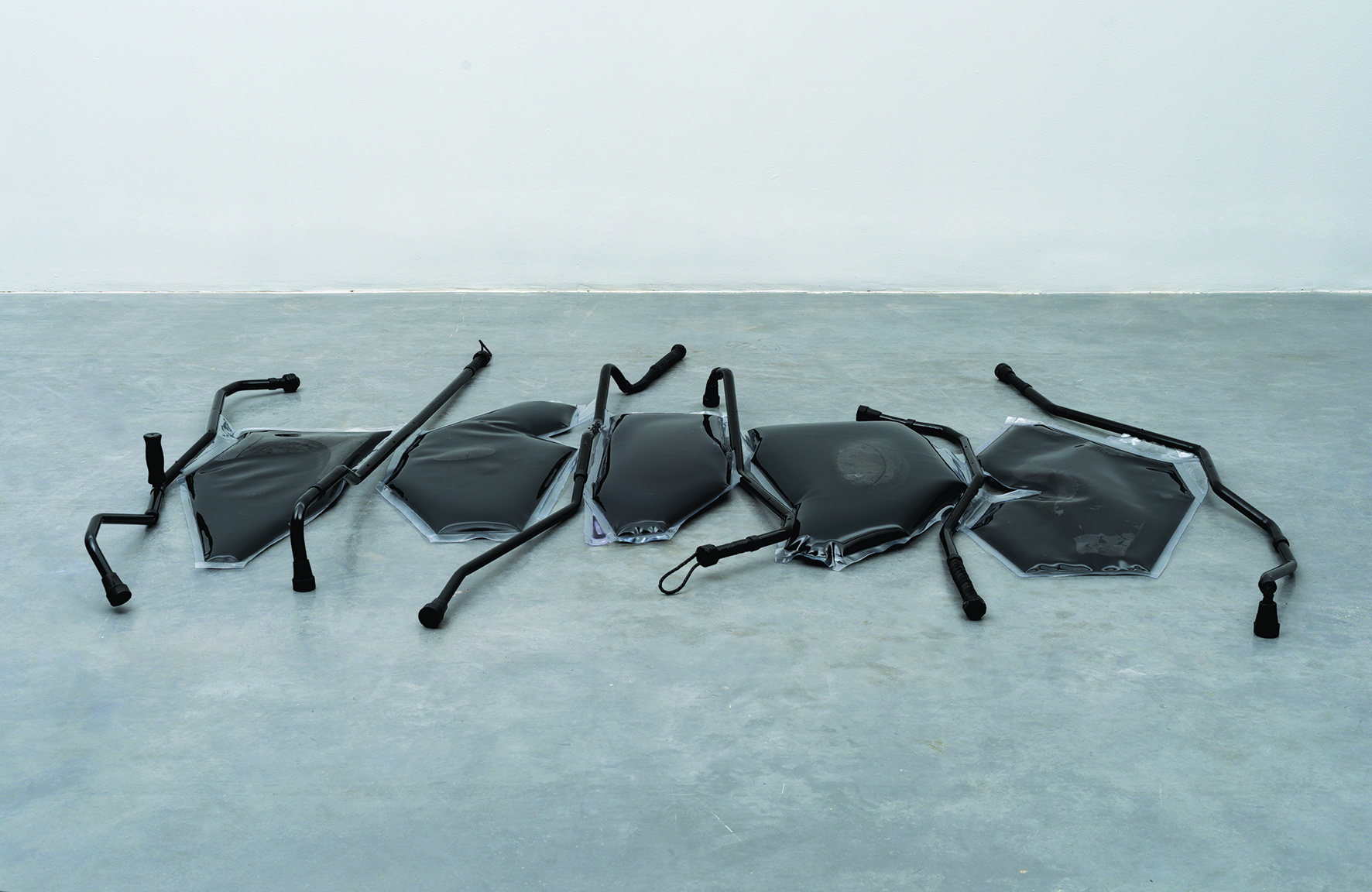
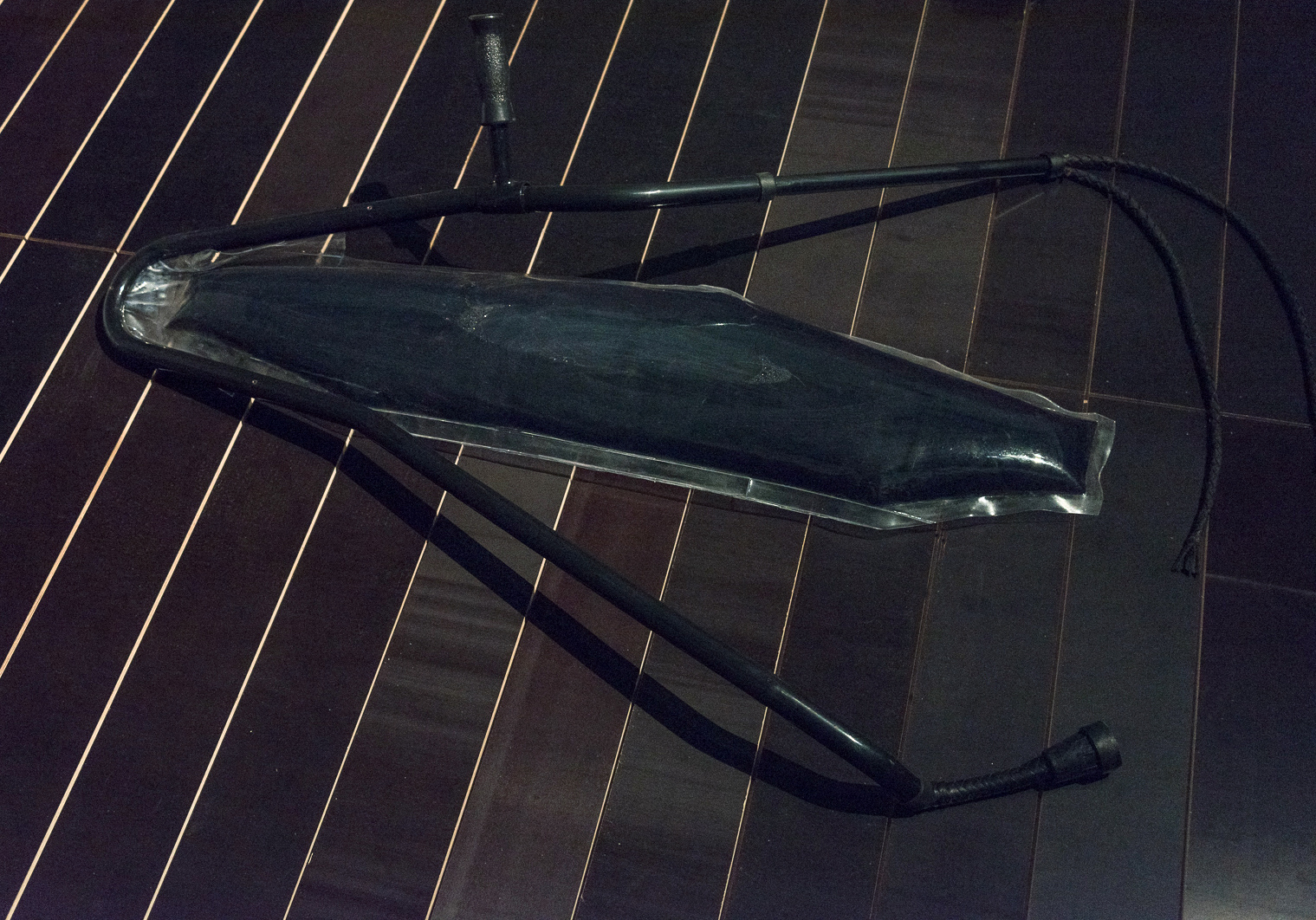
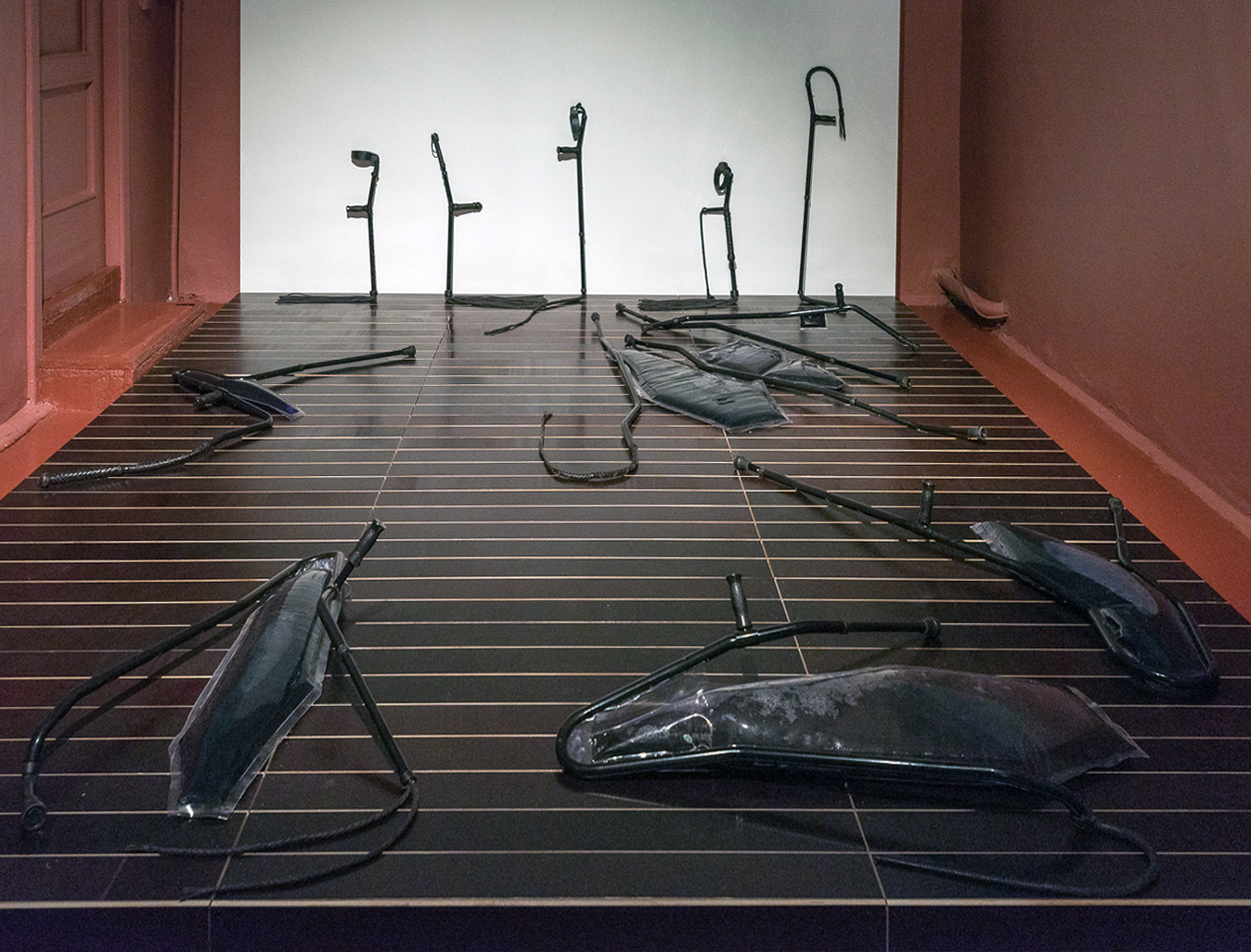
Yaara Zach’s new installation for the 6th Moscow International Biennale for Young Artists, was comprised of distinct sculptural elements that fused together crutches and whips to new, independent bodies. Lying on the floor, next to the crutches-whips was a series of almost monochromatic black objects that appeared as different evolutionary stages of the fused bodies. They have now grown limbs in the shape of transparent liquid bags filled with black and dark purple ink. Some liquid parts were hanging in space, rooted in organic shaped crutches’ legs. In this work, the body was incomplete. It existed in the gaps, as a negative of itself.
These corporal elements were spread on a wooden stage, which became a platform for various physical interactions: the spectators were invited to step on the stage and into the work and to explore the inanimate objects. Every movement was accompanied by distant sounds, as the work functioned like a large-scale resonance box. The viewers moved to and from the installation’s arena and were constantly changing positions: from active to passive, from witness to participant, from able to disabled.
Ya'ara Zach's sculptural environments are based on sterilized ready-made objects and industrial materials, untouched by the human body. They go through processes of de- and re-assembly, exploring the fluid relationship between beauty and violence, and between the industrial and the intimate.
About "Unreasonable Doubt", Petach Tikva Museum of Art, curated by Hasad Maor:
Yaara Zach’s installation "Unreasonable Doubt" was composed of several works, which appeared as a series of reincarnations evolving out of one another. It was a largely black, almost monochromatic installation, in which materials and forms seemed to flow from one piece to the other, echoing one another while tracing the memory of an intimate encounter between the body and various objects found in its surroundings, perhaps ones that were supporting it. In doing so, Zach’s work also traced the manner in which memories are constructed and consolidated, coming to appear closer or more distant, and changing uncontrollably.
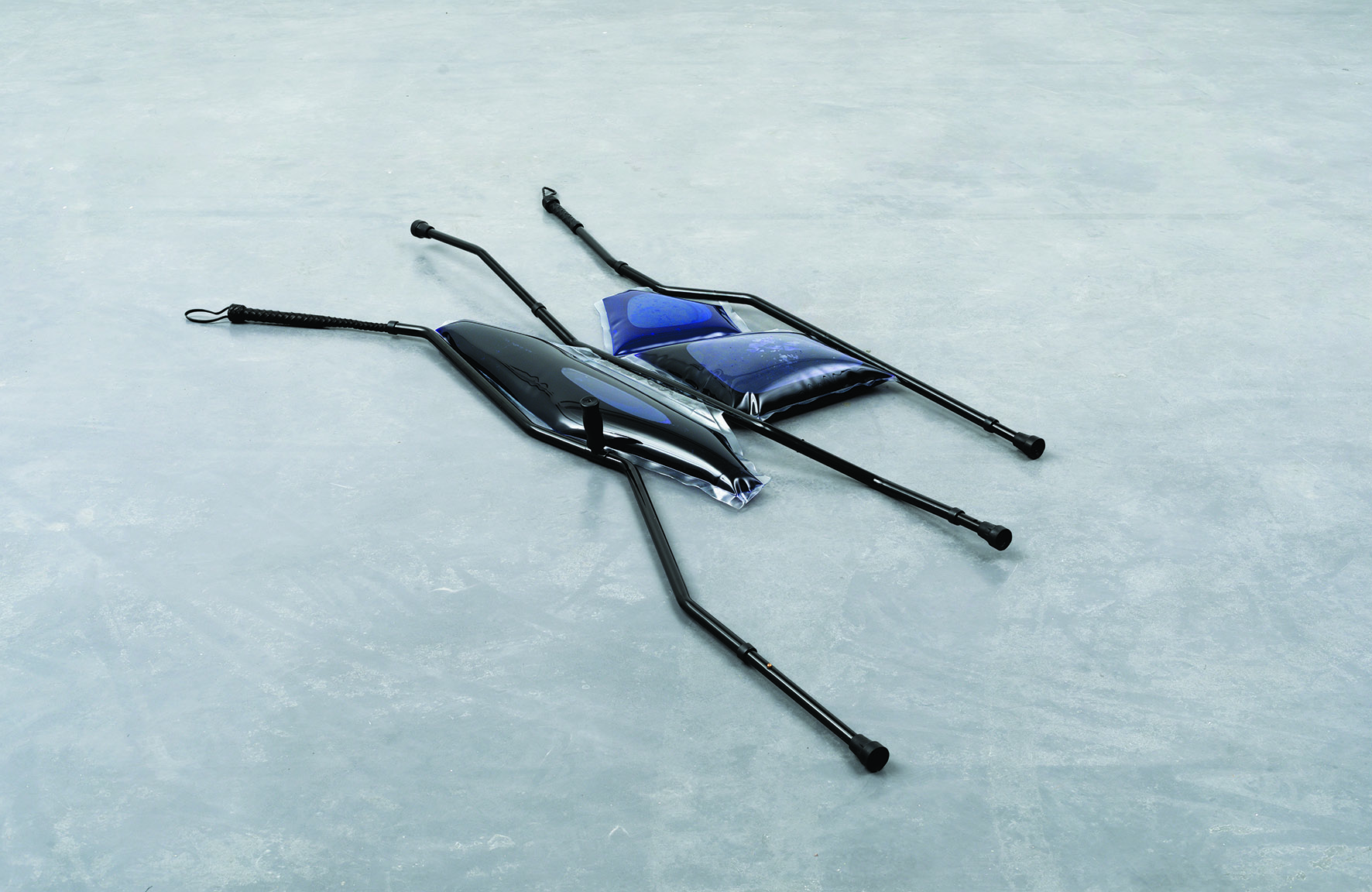
The installation included a series of unique assemblages that combined crutches, leather whips, and amorphous sacks filled with an unidentified fluid in various colours. Each of these assemblages constituted a hybrid combination of worlds, sensations, and emotions, while the space as a whole seemed to vacillate between extreme sterility and a permeable physicality.
This almost impossible combination of elements drawn from different worlds, which represent extreme bodily states, was based on the use of readymade objects and industrial materials that undergo a process of disassembly and reassembly, in a manner relating them to new contexts without eliminating or camouflaging the original ones. Metal accessories for disabled individuals, such as crutches or walkers, designed to support the body and complement its impaired functioning, were thus fused with various types of leather whips, which are associated with testing and straining the body’s ability to withstand states of endurance and sexual pleasure. The resulting hybrids precluded the practical use of the accessories in either of these contexts.
The works were minimalist in character, and resembled linear drawings in space, whose grouping together endows them with a certain impression of volume. A volume that is a result of what could appear as the bifurcation, replication, and multiplication of the objects in space, while they undergo a sort of spontaneous mutation. Yet this impression of volume, which creates a sense of presence, in fact attested to what is absent.
The human body, which constituted the quintessential point of reference for the various elements combined in the works, was completely absent from the space itself. The concern with the intimate contact made by the body as it leans, grasps, absorbs, or experiences pleasure evaporates, and all that seems to remain is a strange hairy growth sprouting out of one of the objects, and fluids in shades of black blue and purple that are contained within soft sacks, providing the only hint of colour in the entire space; bodily residues that exist in a liquid state, imprisoned and impeded from realising their natural thrust to expand in space through the force of entropy. In the absence of an actual body, it seemed that the objects themselves acquire a bodily validation, a humanised presence, and the hair growing out of them seems to carry the memory of the body that once grasped them, attesting to the assimilation of the body’s genetic charge into the object.
And so, the very presence of Zach’s works pointed to an absence – a fundamental lack that cannot be filled mentally or emotionally. These minimalist, seemingly sterile works carried a disturbing charge pertaining to disruption, disorder, excess and contamination. Located in the back of the exhibition space was a large industrial basin filled with an excess of additional sacks containing fluids, which seem about to overflow. This work questions the functionality of the objects scattered throughout the space, the narrative potential embedded in them, and the functional metaphor that arises from them. The sacks in the basin called to mind medical or industrial waste, of the kind accumulated in operating rooms or in biological or chemical labs, while underscoring the dimension of excess that is evoked by their very presence, as well as by the allusion to their contents.
The concept of boundaries, or limits, was clearly attended to in these works; the boundaries of the body, the limits of the support, care or hurt it experiences, as well as the metallic, fluid and conceptual edge or limit of the object itself. The arrangement of some of the works on the floor maximised their area of contact, and thus also the degree to which they succumbed, or were given over to, the surrounding space and to the gaze, in a process of assimilation that seems to challenge the basic separation between space and object.
The work seemed to suspend the viewer at a liminal threshold, as the space between the objects and visitors gave rise to an imagined performatives sphere, whose passive quality was due to the prohibition of contact and action. If there was a drama, it unfolded between the body of the viewer and the collapsed, bodiless objects, which alluded to the body’s substitutes and extensions, as well as to its possibilities for action. The presence of the body and of various bodily excretions, which accumulate in a concrete and exposed manner, has been made evident over time in works such as Helen Chadwick’s Piss Flowers (1991–92, a series of white bronze sculptures cast out of cavities formed in the snow by the artist’s urine), or Gideon Gechtman’s Shaved Nude or Brushes (1974–79, works featuring the artist’s shaved hair in jars). By contrast, Zach’s works did not underscore the presence of the body but rather its absence. Yet in opposition to this vulnerable, missing, absent body, there emerged the presence of the viewer’s body in space – clumsy, undefined, and seemingly threatened.

